
The Story
The story
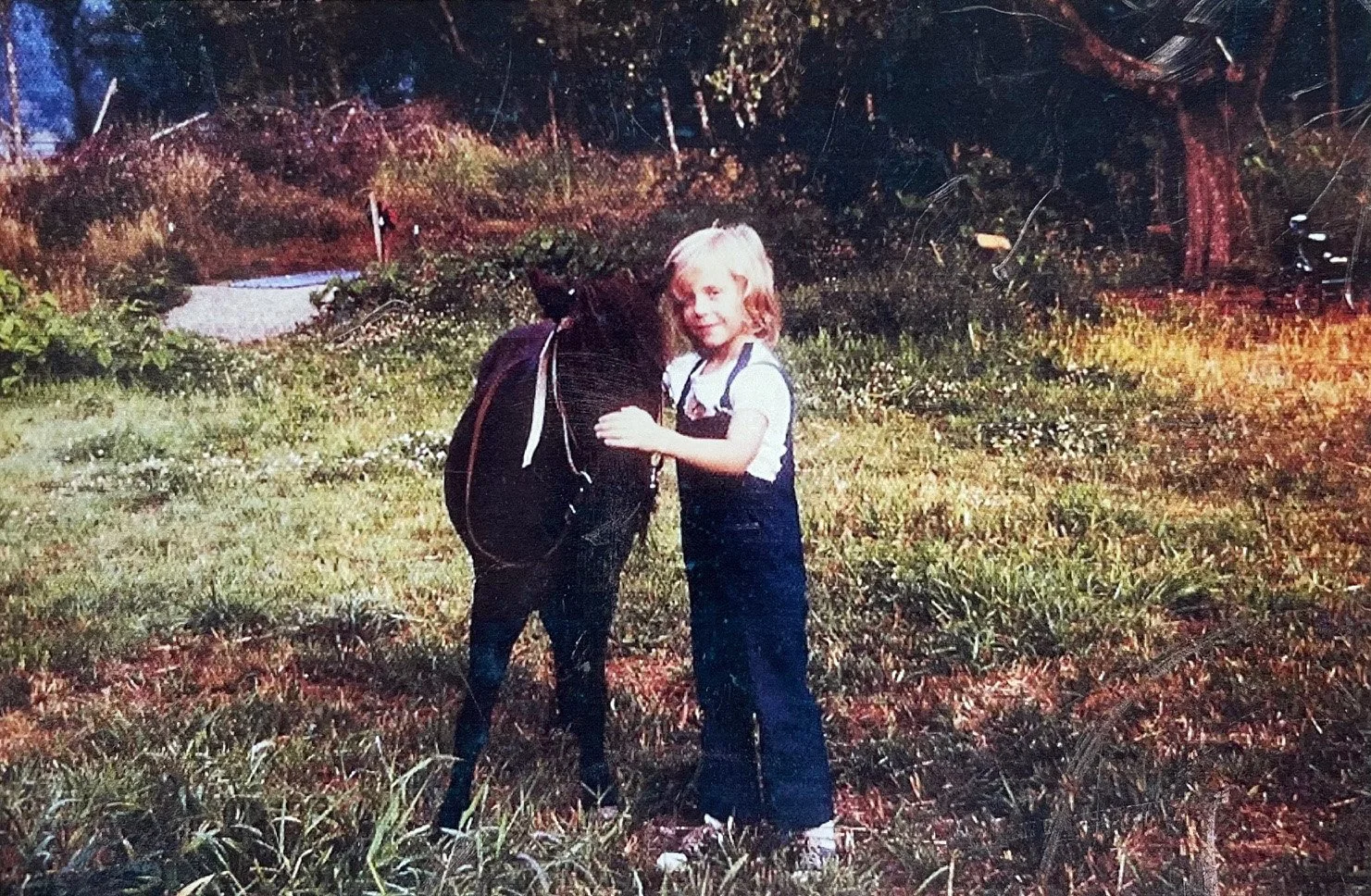
I was six years old when my mother and I moved to the end of Mud Bay, on the lower Puget Sound. It was isolated then, where the tide goes all the way out and comes all the way back. Just water, sky, and the kind of quiet that gets into you.
It was a childhood measured in light, the particular silver of morning mist over the inlet, the way afternoon turns the water copper, the hush that settles when the bay empties and the herons move in. And always, horses. Not as sport or ambition then, just as companions. A soft muzzle on my shoulder as we stood together and looked at the water. I told them everything, my sorrows, my worries, my small joys. They listened the way only horses do: completely, without judgment, in a language made entirely of presence.
That stayed with me.
I was drawn deeper into their world over the years, into dressage and eventing, into the discipline and partnership those sports demand raising my daughter through Pony Club and watching a new generation discover what I already knew. Warmbloods and thoroughbreds. The athleticism, the sensitivity, the extraordinary conversation between horse and rider conducted almost entirely in silence.
What I keep returning to, in the studio as in life, is the way they move. The compressed power before the canter departs. The ear that swivels toward you before the eye does. The stillness that is never quite still. I am not painting horses as subjects. I am painting what it feels like to be known by one.
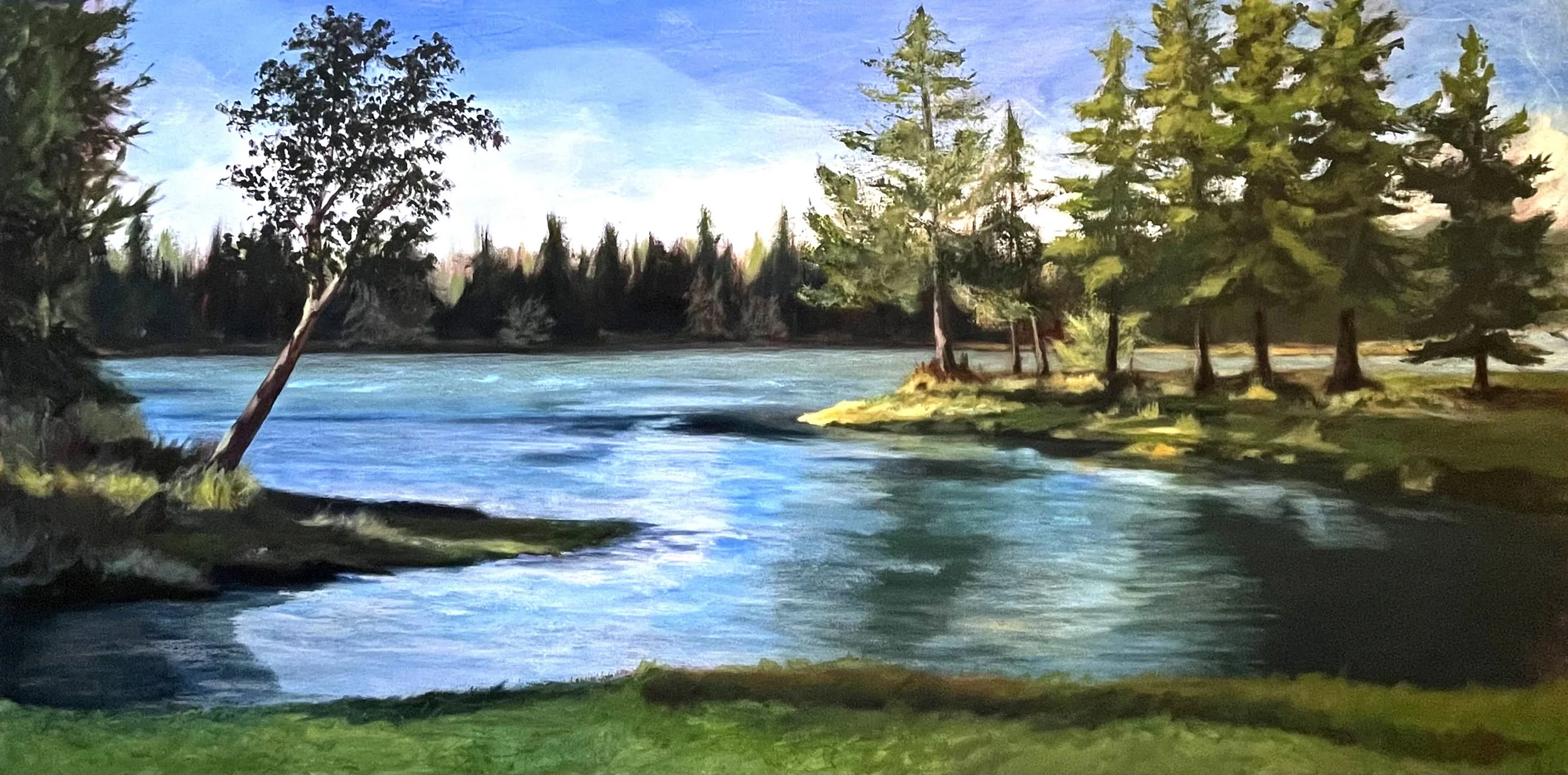
The landscapes come from the same place, Puget Sound inlets wrapped in fir and cedar, light arriving sideways through coastal overcast, the beauty of a sky that can’t quite decide. Growing up in that light teaches you to see in layers. Encaustic lets me paint in them. Beeswax, pigment, shellac, built slowly, fused with fire, scraped back, rebuilt. Each painting is less made than revealed.
I live and work in Olympia, Washington.
Where Ideas
Take Shape
In this segment from The Art Zone, I talk about encaustic painting - the process, the horses, and what I am really trying to capture in my work.
If something speaks to you, I’d love to hear from you.